
Separation
I think it has happened to everyone, at least once in their life, to read or hear that the mountain “teaches”, that the mountain is a “teacher of life”. With their austerity peaks and summits instill fear and awe, inspiring challenges and adventures.
Remote woods and impervious valleys suggest profound reflections with their sounds, their perfumes, their colours. The severe soul of the mountain environment has always been a source of noble thoughts and the origin of ambitious projects through which measure the physical and emotional limits of the human being. The history of mountaineering has shown us that the lessons taught by the mountain know no half terms and tell of hard and often extreme experiences. These, whether they are lived alone or in company, whether they are inspired by religious fervor rather than pure ambition, often lead to making peaks and forests correspond to a real soul capable of communicating with us. A sort of anthropization takes place; it leads to feeling the rock vibrate, the trees speak and in general to find a conscience in those inanimate objects of which we find ourselves at the mercy, almost to the limit of animism.
However, I believe that the reality is much simpler: we have a tendency to ennoble our actions and the lessons we draw from them, both in the mountains and in any other environment. Even more probable is that concepts and notions that we already had inside are found externally, as well as images, which are then projected outside. Also in this case, therefore, probing one’s limits through the external environment turns out to be a journey towards one’s interior.
Credo sia capitato a tutti, almeno una volta nella vita, di leggere o sentir dire che la montagna insegna, che la montagna è maestra di vita. Con la loro imponenza, la loro austerità vette e cime incutono timore e reverenza, ispirando imprese ed avventure.
Boschi remoti e vallate impervie suggeriscono riflessioni profonde con i loro suoni, i loro profumi, i loro colori. L’anima severa dell’ambiente montano è da sempre fonte di pensieri nobili ed origine di progetti ambiziosi tramite cui misurare i limiti fisici ed emotivi dell’essere umano. La storia dell’alpinismo ci ha mostrato che le lezioni impartite dalla montagna non conoscono mezzi termini e raccontano di esperienze dure e spesso estreme. Queste, sia che vengano vissute in solitaria o in compagnia, sia che vengano ispirate dal fervore religioso piuttosto che da pura ambizione, portano sovente a far corrispondere a picchi e foreste una vera e propria anima in grado di comunicare con noi. Scatta una sorta di antropizzazione che porta a sentire la roccia vibrare, gli alberi parlare ed in generale a trovare una coscienza in quegli oggetti inanimati di cui ci si trova in balia, quasi al limite dell’animismo.
Credo però che la realtà sia molto più semplice: abbiamo la tendenza a nobilitare le nostre azioni e gli insegnamenti che ne ricaviamo, così in montagna come in qualsiasi altro ambiente. Più probabile ancora è che si ritrovino esternamente concetti e nozioni che avevamo già dentro, così come le immagini, che vengono quindi proiettati al di fuori. Anche in questo caso, dunque, sondare i propri limiti attraverso l’ambiente esterno si rivela essere un viaggio verso il proprio interno.
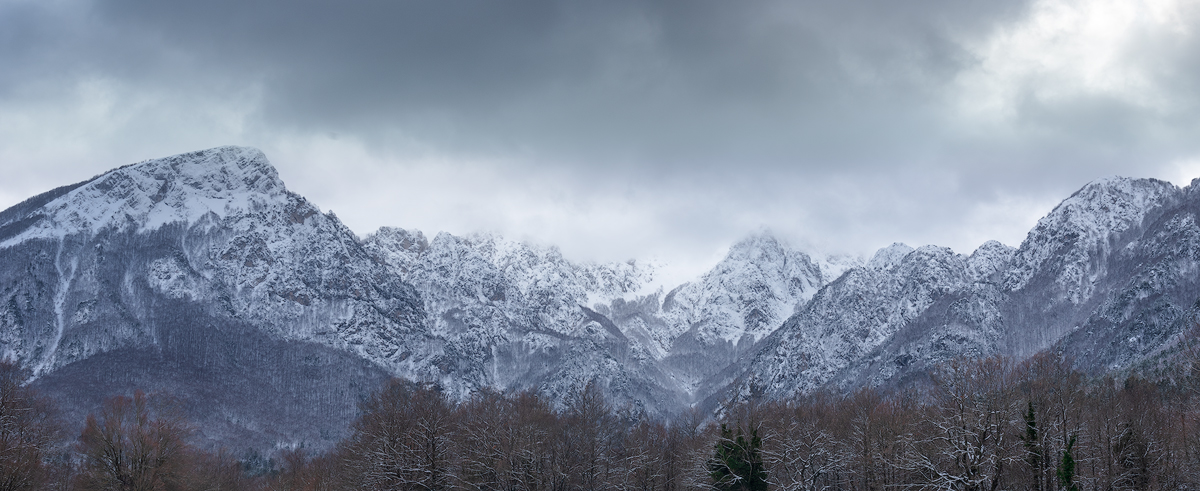
There are dozens of examples of this type of communication, extrapolated from mountain books and stories, but I would like to write about what touches me more closely and which originates precisely in photographic excursions. I’m talking about the ability to let go, to separate from what cannot be achieved. Specifically of what sometimes you can’t or you are not able to capture.
The impediments that block us can be of different nature: material, time-consuming, physical, but sometimes also lack of inspiration. In each of these cases, the lesson to be learned is to learn to manage frustration, to postpone it to another occasion or even, more simply, to give up without drama. In these cases we learn to photograph with the mind, to internally fix a concept that we intuit in a given place at that moment. If truly felt, this will emerge again, perhaps elsewhere, illuminated by another light and in different forms. The inner image is the true value to be grasped and kept alive.
The further reflection that emerges is that this perspective gives another value to time. In fact, when we face a hiking with this spirit, every moment we live, everything our eyes rest on, every concept that our mind frames becomes important. There is no more wasted time, there are no more wasted opportunities, there is no more rush to the golden or blue hour, but everything is a teaching that we receive.
In this case, therefore, we can say that the mountain acquires its own voice, which is none other than the reflection of ours. The important thing is to have ears capable of hearing what he has to say: we will hear the most beautiful story about ourselves.
Si potrebbero fare decine di esempi di questo tipo di comunicazione, estrapolati da libri e racconti montani, ma vorrei scrivere di quello che mi tocca più da vicino e che trova origine proprio nelle escursioni fotografiche. Parlo della capacità di lasciar andare, di separarsi da quanto non si può raggiungere. Nello specifico di quello che tal volta non si può o non si riesce ad immortalare.
Gli impedimenti che ci bloccano possono essere di diversa natura: materiali, di tempo, fisici, ma a volte anche mancanza di ispirazione. In ognuno di questi casi l’insegnamento che se ne ricava è imparare a gestire la frustrazione, a rimandare ad altra occasione o anche, più semplicemente, a rinunciare senza far drammi. In questi casi si impara a fotografare con la mente, a fissare internamente un concetto che in quel momento intuiamo in un dato luogo. Se veramente sentito, questo emergerà di nuovo, magari altrove, illuminato da un’altra luce e sotto forme diverse. È l’immagine interiore il vero valore da afferrare e mantenere vivo.
L’ulteriore riflessione che emerge è che quest’ottica regala un altro valore al tempo. Difatti quando si affronta un’uscita con questo spirito, ogni istante che viviamo, ogni cosa su cui si posano i nostri occhi, ogni concetto che la nostra mente inquadra diventa importante. Non esiste più il tempo perso, non ci sono più occasioni sprecate, non c’è più corsa alla golden o alla blue hour, ma tutto è un insegnamento che riceviamo.
In questo caso, dunque, si può dire che la montagna acquisti una sua voce, che poi altro non è che il riflesso della nostra. L’importante è avere orecchie capaci di sentire quanto ha da dire: ascolteremo il racconto più bello su noi stessi.