The importance of the baggage
No, this article is not a review of a photography backpack. The term “baggage” is here intended in a broader and metaphorical sense and refers to the quantity (and quality) of the photographer’s life experience. Therefore I would like to avoid writing about the “technical” baggage, considering this a different, albeit related, topic; I’d rather like to focus on the “emotional and cultural” one.
The importance of the experiences that we carry within us is fundamental for the creation of true and meaningful shots. Everything we have seen, lived, experimented, suffered, enjoyed, significantly influences the way we look at the world around us.
Too often on social media we find photos that are the result of imitation, where the photographer imposes the reason, the profit in terms of likes and followers, over their creations, clogging the web with umpteenth re-propositions of the same locations, the same compositions and often even the same lighting conditions. There’s nothing artistic in this way of doing things, but rather marketing; there’s no warmth, there’s no truth, but cold logic. The result is a fake, emotionally silent work, valorisable only in the light of the hit-and-run typical of social media. Only the brief and superficial gaze of the average observer can be fooled by these images. Personally, when I look at these photos, I ask myself “where’s the author? What message he wanted to convey? What can I find in this immortalized moment? Where’s the emotion?”; the answers I find, unfortunately, are never valid.
Luckily there are still many authors who bring their emotional baggage into their shots. They manage to do so with sensitivity and delicacy and when the eye runs along their compositions, through those colours and contrasts, a world of sharing, thoughts, reflections open up. You find depth, three-dimensionality, in what only apparently is a two-dimensional restitution of pixels. You find a connection with the author that manages to draw out new and different meanings in the observer.
No, questo articolo non è la recensione di uno zaino fotografico. Il termine “bagaglio” è qui inteso in senso più ampio e metaforico ed è riferito alla quantità (e qualità) del vissuto del fotografo. Vorrei quindi evitare di parlare di bagaglio “tecnico”, ritenendo questo un argomento diverso, seppur correlato, quanto piuttosto soffermarmi su quello “emozionale e culturale”.
L’importanza delle esperienze che ci si porta dentro è fondamentale per la realizzazione di scatti veri e profondi. Tutto quello che abbiamo visto, vissuto, sperimentato, sofferto, goduto, influenza notevolmente il modo in cui guardiamo al mondo intorno a noi.
Troppo spesso sui social si trovano foto figlie dell’imitazione, dove chi scatta impone la ragione, il tornaconto in termini di like e follower, sulle proprie creazioni, intasando il web di ennesime riproposizioni delle stesse location, delle stesse composizioni e spesso anche delle stesse condizioni luminose. In questo modo di fare non c’è nulla di artistico, quanto piuttosto marketing; non c’è calore, non c’è verità, ma fredda logica. Ne consegue un’opera falsa, emozionalmente muta, valorizzabile solo alla luce del mordi e fuggi tipico dei social. Solo lo sguardo rapido e superficiale dell’osservatore medio può essere ingannato da queste immagini. Personalmente, quando guardo queste foto, mi domando “dov’è l’autore? Qual è il messaggio che voleva trasmettere? Cosa posso trovare io dentro questo istante immortalato? Dov’è l’emozione?”; le risposte che trovo, purtroppo, non sono mai valide.
Per fortuna ci sono ancora tanti autori che portano il loro bagaglio emotivo dentro i loro scatti. Riescono a farlo con sensibilità e delicatezza e quando l’occhio scorre lungo le loro composizioni, attraverso quei colori e quei contrasti, si apre un mondo di condivisione, di pensieri, di riflessioni. Si trova profondità, tridimensionalità, in quella che solo apparentemente è restituzione bidimensionale di pixel. Si ritrova una connessione con l’autore che riesce a tirare fuori dall’osservatore anche significati nuovi e diversi.
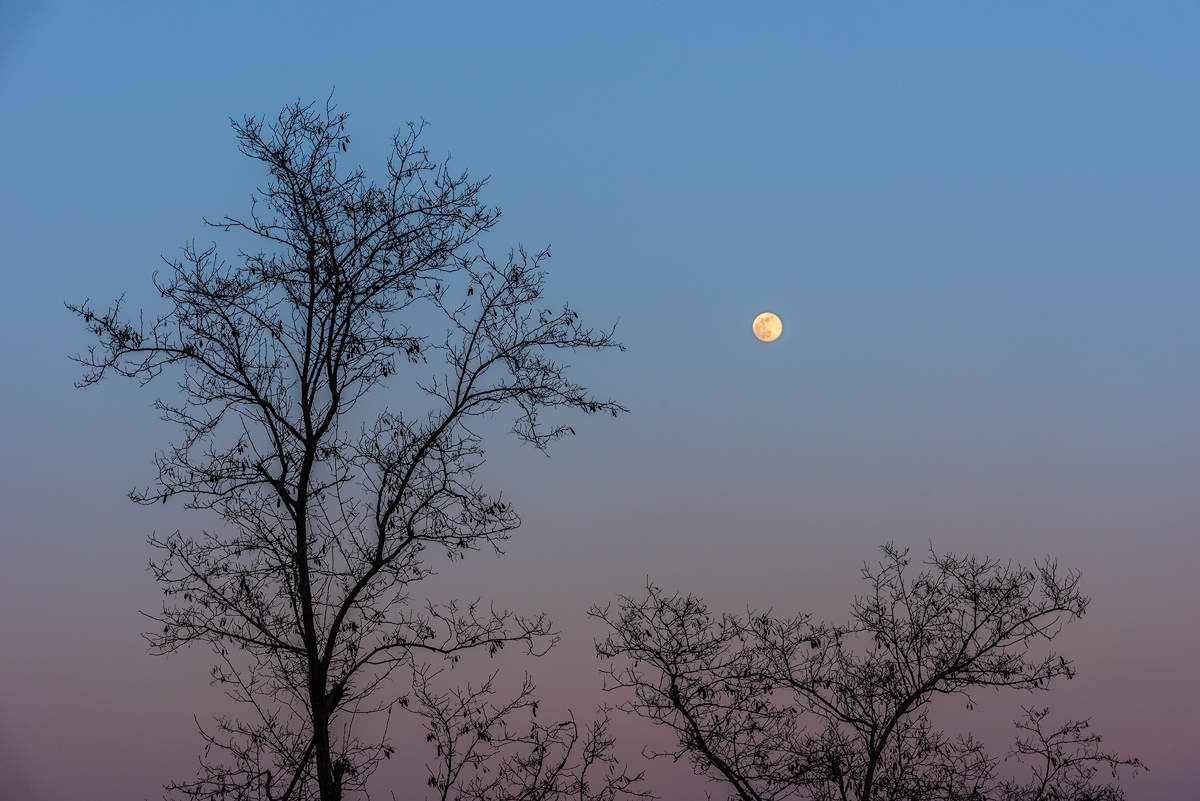
In a photographic hike I never look for a specific shot, but rather a state of mind derived from seasonality and weather and light conditions. As mentioned in other articles here on the blog, I never go looking for something pre-established, but I abandon myself to my instinct, that is guided by the environment; I let the images find me, let’s say. When my eye intercepts a composition, I know that behind it there is something deeply mine. There is the reworking of something that was already inside me; it is the unconscious that finds its images outside.
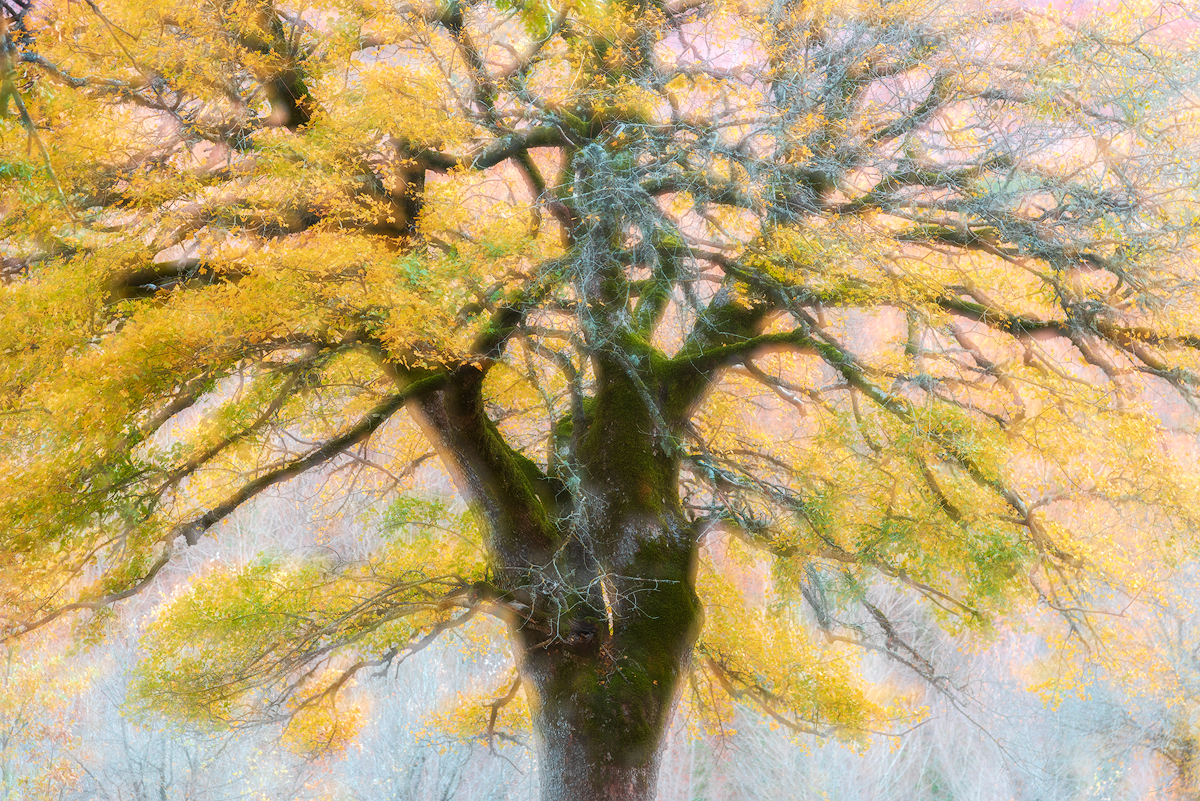
These latent images are the consequence of what I have experienced, of the people who have influenced my emotions, of the art that has defined my personal taste. In the seasonal change of the leaves’ colors I find the eyes of the women I have loved. In the warmth of the sun, I find the same one in the hugs of those who love me, of my son. In the icy wind, I relive the coldness of the experiences that have marked me and taught me. Sharp peaks, soft shapes, lashing rains, spring blooms, soft or frozen snow, are nothing but metaphors of my experience. Smooth white trunks interspersed with golden autumn leaves recall Klimt. The chromatic transitions of sunrises and sunsets evoke Rothko. Multiple exposures resonate with the concepts of Cubism. Intentional camera movement technique is connected to the Impressionists’ lesson. The composition rules that I instinctively follow are influenced by architecture, sculpture, the rhythm of music.
Everything is connected, nothing is random. In real photography, as in any other art form, there’s all of the above and much more. There are joys and sorrows: the deeper they have been experienced, the easier will be to find them in the shots. The wider the emotional sphere, the wider the knowledge of the figurative arts, the more possibility to emerge the images. In real photography there’s the ability to seize the moment, because there’s the capacity to live the present. In true photography there is gratitude above all; gratitude for the path that has brought us to that unique and unrepeatable moment, like the spontaneous smile of a son, or the light of the sunset that brightens amber, full of love, eyes.
In escursione fotografica non ricerco mai uno scatto specifico, quanto piuttosto uno stato d’animo derivato dalla stagionalità e dalle condizioni meteo e di luce. Come accennato in altri articoli qui sul blog, non vado mai alla ricerca di qualcosa di prestabilito, ma mi abbandono all’istinto, a sua volta guidato dall’ambiente che mi circonda; lascio che le immagini mi trovino, in un certo senso. Quando il mio occhio intercetta una composizione, so che dietro c’è qualcosa di profondamente mio. C’è la rielaborazione di qualcosa che era già dentro di me; è l’inconscio che ritrova le sue immagini all’esterno.
Queste immagini latenti sono la conseguenza di quello che ho vissuto, delle persone che hanno influenzato le mie emozioni, dell’arte che ha definito il mio gusto personale. Nella mutevolezza stagionale dei colori delle foglie ritrovo gli occhi delle donne che ho amato. Nel calore del sole, ritrovo quello degli abbracci di chi mi vuole bene, di mio figlio. Nel vento gelido, rivivo la freddezza delle esperienze che mi hanno segnato ed insegnato. Vette aguzze, forme morbide, piogge sferzanti, le fioriture primaverili, la neve morbida o gelata, non sono altro che metafore del mio vissuto. Tronchi bianchi e lisci inframezzati dalle foglie d’orate d’autunno richiamano Klimt. Le transizioni cromatiche di albe e tramonti, rievocano Rothko. Esposizioni multiple risuonano con i concetti del Cubismo. Il mosso creativo è connesso alla lezione degli Impressionisti. Le regole di composizione che seguo istintivamente, sono influenzate dall’architettura, dalla scultura, dal ritmo della musica.
Tutto è connesso, nulla è casuale. Nella fotografia vera, come in qualsiasi altra forma d’arte, c’è tutto questo e molto di più. Ci sono gioie e dolori che sono tanto più rintracciabili, quanto più profondamente vissute. Più è ampia la sfera emotiva, più è ampia la conoscenza delle arti figurative, più le immagini hanno la possibilità di emergere. Nella fotografia vera c’è la capacità di cogliere l’attimo, perché si è in grado di vivere il momento presente. Nella fotografia vera c’è soprattutto gratitudine; gratitudine per il percorso che ci ha portato fino a quel momento unico ed irripetibile, come il sorriso spontaneo di un figlio, o la luce del tramonto che illumina occhi d’ambra pieni d’amore.